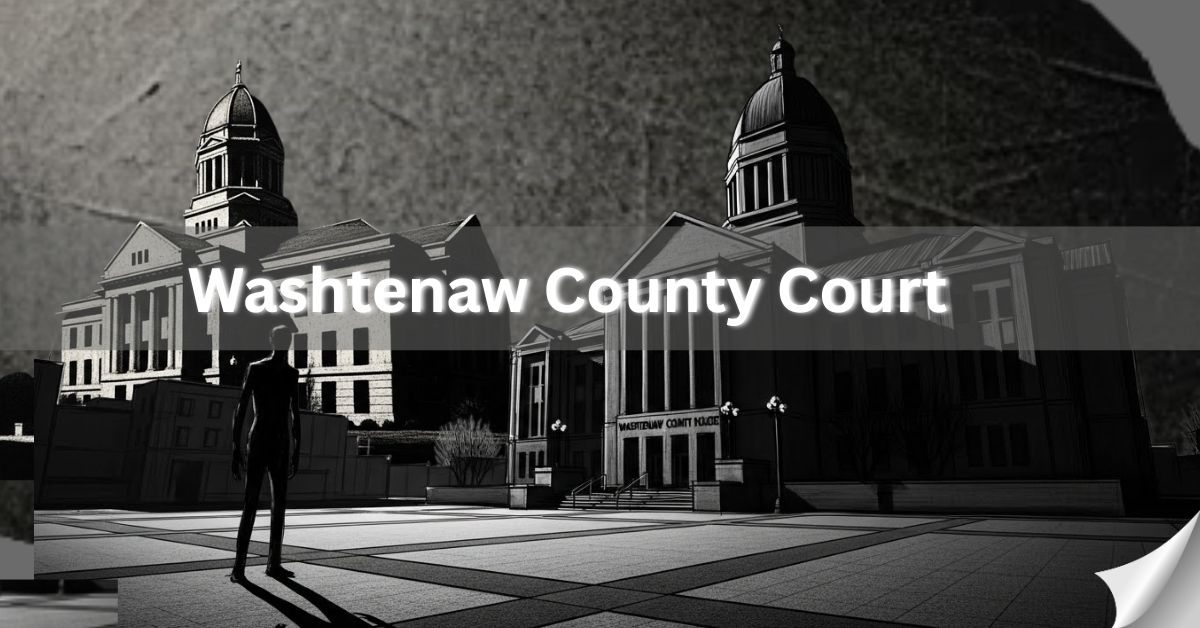
Washtenaw County Court serves as the central judicial authority for handling legal matters within the county judiciary. It manages case activity tied to civil disputes, criminal charges, family law filings, and probate proceedings under the Michigan court system. Court records reflect official filings, scheduled hearings, and procedural updates tied to each case. This structure supports public record review through authorized court sources.
Washtenaw County Court plays a direct role in maintaining organized case information across its court divisions. Each record follows Michigan law and local court rules, creating consistency across the county judiciary. Public case files often show party names, filing dates, and court actions in a clear format. These records help users confirm case progress and court involvement with accuracy.
How to Search Washtenaw County Court Records
Washtenaw County court records and case information can be searched online through the county’s official Trial Court Public Access system. This portal provides public information for criminal, civil, family, and probate cases.
Official Website:
https://tcweb.ewashtenaw.org/PublicAccess/default.aspx
Open the Official Court Records Website
- Open your web browser.
- Enter the official Washtenaw County Trial Court Public Access website shown above.
- This system is used by the county courts to display public case information.
Once the page loads, you will see search options for different case types.
Select the Correct Case Category
Before entering any search details, choose the correct case category:
- Criminal Cases – felony and misdemeanor matters
- Civil / Family / Probate Cases – lawsuits, divorce, custody, estate cases
- Court Calendar – scheduled hearings and court dates
Selecting the correct category helps limit results to the right court records.
Choose a Search Method
The system allows several ways to search. The best method depends on the information you already have.
Search by Case Number
- A case number is a unique identifier assigned when a case is filed
- It usually appears on court notices, summons, or previous paperwork
- Entering the full case number gives the most accurate result
This is the preferred option when court documents are already available.
Search by Party Name
- Enter the name of the defendant or plaintiff
- Use the full name for better accuracy
- If no results appear, try last name only or spelling variations
Criminal searches usually list only the defendant’s name. Civil searches may list multiple parties.
Review Search Results
After submitting the search, matching cases will appear.
Results may show:
- Case number
- Party names
- Case type
- Case status (open or closed)
- Last activity date
Clicking a case displays the docket history and case activity details.
Record Availability
The online system provides informational court data, such as:
- Case progress
- Hearing schedules
- Filing history
Some records are restricted and do not appear online, including:
- Juvenile cases
- Sealed cases
- Certain family or mental health matters
Official certified copies require a formal request through the court office.
Get Copies or More Information
If the online portal doesn’t show the document you need:
- Visit the Records Access page on the official Washtenaw County site: Records Access – Washtenaw County
https://www.washtenaw.org/1034/Records-Access - This page explains how to request records in person or by mail through the Clerk’s office
What is the Washtenaw County Court System
The Washtenaw County Court System is the local judicial structure that handles trials, filings, and hearings within county limits. It operates as part of Michigan’s unified trial court system and serves residents, attorneys, and public agencies.
Role of County Courts in Michigan
Washtenaw County courts carry out state law at the local level. These courts resolve disputes, review evidence, and issue binding rulings. Each court division handles a defined case type, so cases move through the proper legal channel.
Michigan uses a trial court system, not separate county laws. This setup keeps procedures consistent statewide. Washtenaw courts follow state rules, court procedures, and judicial standards set by the Michigan Supreme Court.
Key responsibilities include:
- Interpreting Michigan statutes in local cases
- Managing trials, motions, and hearings
- Protecting legal rights through due process
- Maintaining public trust in judicial outcomes
Court Divisions Within Washtenaw County Courts
The Washtenaw County courts include multiple trial-level divisions. Each division focuses on a clear subject area, which improves case flow and clarity.
Main court divisions include:
- Circuit Court – Handles felony cases, major civil disputes, family matters, and appeals from lower courts
- District Court – Covers misdemeanors, traffic cases, landlord-tenant disputes, and civil claims under set limits
- Probate Court – Oversees estates, guardianships, conservatorships, and mental health cases
This judicial structure helps courts process cases faster and limits confusion for the public.
How Washtenaw Fits Into the Michigan Judiciary
Washtenaw County courts operate under Michigan’s statewide judiciary. Judges apply state law, yet decisions focus on local facts and community needs. Appeals from Washtenaw courts move to the Michigan Court of Appeals, then the state’s highest court if required.
Types of Courts in Washtenaw County
Washtenaw County courts teen primary categories mein divided hain. Har court ka role clearly defined hota hai, jo case processing ko fast aur organized rakhta hai.
Ye courts mil kar washtenaw county courts system ko run karte hain aur criminal, civil, family, aur probate matters ko handle karte hain.
Circuit Court (22nd Judicial Circuit)
22nd Judicial Circuit Court serious aur high-level cases ke liye hota hai. Ye court county ka main trial court mana jata hai.
Circuit court jurisdiction ke under aane wale major areas:
- Felony cases
Serious crimes jaise assault, theft, fraud, aur repeat offenses yahan sunay jate hain. - Large civil disputes
High-value lawsuits, contract conflicts, aur property disputes is court mein file hote hain. - Domestic relations
Divorce, child custody, parenting time, child support, aur spousal support cases yahin decide hote hain. - Appeals
District Court aur Probate Court ke decisions ke khilaf appeals bhi Circuit Court sunta hai.
Is court ke decisions long-term legal impact rakhte hain, is liye hearings formal aur structured hoti hain.
District Courts
District Courts daily legal issues ko handle karte hain. Yahan district court cases ki volume sab se zyada hoti hai.
District Court ke common case types:
- Traffic violations
Speeding tickets, license issues, aur local ordinance violations. - Misdemeanors
Minor criminal offenses jahan jail time short ya fines hotay hain. - Landlord–tenant cases
Evictions, unpaid rent disputes, aur lease violations. - Early felony hearings
Arraignments aur preliminary exams yahin se start hotay hain.
District Courts ka focus quick hearings aur fast resolutions hota hai.
Probate Court
Probate Court family-related aur personal legal matters ko deal karta hai. Ye cases aksar long-term supervision require karte hain.
Probate Court ke main areas:
- Wills & estates
Property distribution, executor oversight, aur inheritance disputes. - Guardianships
Minors ya adults ke liye legal guardians appoint kiye jate hain. - Mental health proceedings
Court-ordered treatment aur evaluations state law ke mutabiq hoti hain.
Is court ka goal protection, supervision, aur lawful decision-making hota hai.
Quick Comparison Table
| Court Type | Main Focus | Common Cases |
|---|---|---|
| Circuit Court | Serious trials | Felonies, large civil, family law |
| District Court | Everyday matters | Traffic, misdemeanors, evictions |
| Probate Court | Personal affairs | Estates, guardianships |
Specialty & Problem-Solving Courts
Specialty and problem-solving courts in Washtenaw County focus on accountability paired with rehabilitation programs. These courts aim to reduce repeat offenses by offering structured alternatives to traditional sentencing.
Rather than relying only on jail time or fines, specialty courts address root causes behind certain offenses. This approach supports long-term stability for participants and improved public safety across the county.
Family & Juvenile Court
The Family and Juvenile Court handles cases involving children and family welfare. Its role centers on safety, responsibility, and lawful care arrangements.
Two case types often create confusion: dependency and delinquency. Dependency cases involve children who need court protection due to neglect, abuse, or lack of proper care. The focus stays on placement, services, and family reunification when possible.
Family & Juvenile Court case types include:
- Child custody and parenting time
- Adoption and termination of parental rights
- Juvenile delinquency proceedings
- Child protection and foster care cases
This court plays a central role in early intervention. Many cases connect families with counseling, education services, or community-based programs.
Veterans Court
Veterans Court serves former military members charged with certain criminal offenses. The court recognizes that service-related challenges often contribute to legal trouble.
Eligibility depends on veteran status, charge type, and risk assessment. Most participants face non-violent offenses and agree to follow strict court supervision.
A strong rehabilitation focus sets this court apart. Participants receive support tied to mental health care, substance use treatment, and employment services. Progress determines advancement through program stages.
Veterans Court goals include:
- Reducing repeat offenses
- Supporting recovery and stability
- Encouraging lawful community reintegration
Completion may lead to reduced penalties or case dismissal, based on performance and court approval.
Drug Treatment Court
Drug Treatment Court offers alternative sentencing for non-violent offenders with substance use disorders. This court replaces jail-focused outcomes with treatment-based justice.
Participants enter structured programs that combine counseling, testing, and frequent court reviews. Judges monitor progress closely and respond to setbacks with graduated sanctions.
Key features of Drug Treatment Court include:
- Eligibility limited to non-violent offenses
- Court-supervised treatment plans
- Regular progress hearings and testing
Many participants gain stability through sobriety, employment, and compliance with court terms. Successful completion often results in reduced sentencing outcomes.
Criminal vs Civil Court Processes
Criminal and civil court processes in Washtenaw County follow different legal paths and serve different purposes. One focuses on criminal offenses, and the other resolves civil disputes between parties.
Both systems operate within the county court structure, yet they apply separate rules, proof standards, and case timelines.
Core Difference Between Criminal and Civil Cases
Criminal cases involve actions considered offenses against the public. These cases include misdemeanor and felony charges filed by the government. A prosecutor represents the state, and penalties may include jail time, probation, or fines.
Civil cases involve disputes between private parties. These matters often relate to money, property, contracts, or personal injury. The court’s role centers on resolving disagreements rather than issuing punishment.
Key distinction at a glance:
| Criminal Court | Civil Court |
|---|---|
| Government files the case | Private party files the case |
| Involves criminal offenses | Involves civil disputes |
| Penalties may include jail | Outcomes focus on compensation |
Burden of Proof
The burden of proof differs sharply between the two systems. Criminal courts require proof beyond a reasonable doubt. This high standard protects the accused from wrongful conviction.
Civil courts apply a lower standard known as preponderance of the evidence. This means the claim appears more likely true than not. Judges or juries weigh facts and decide which side presents stronger evidence.
This difference shapes how cases are prepared, argued, and decided.
Which Courts Hear These Cases
In Washtenaw County, District Courts handle most misdemeanors, traffic violations, and smaller civil claims. Felony cases begin in District Court for early hearings, then move to Circuit Court for trial.
Civil disputes with higher dollar amounts move directly to Circuit Court. Probate Court handles civil matters tied to estates, guardianships, and mental health proceedings.
Each court plays a defined role within the case system.
Typical Case Flow
Criminal cases usually follow this path:
- Arrest or citation
- Arraignment
- Pretrial hearings
- Trial or plea resolution
- Sentencing
Civil cases often follow this path:
- Complaint filed
- Response submitted
- Discovery phase
- Settlement talks or trial
- Judgment issued
Court Records, Case Access & Public Information
Court records in Washtenaw County give the public a way to review case activity and official filings. These materials explain what happened in court, who filed documents, and how a matter progressed.
This section clarifies how records differ from cases and dockets, what the public can view, and which copies carry legal weight.
Records, Cases, and Dockets
Court records refer to documents created or filed during a legal matter. These include complaints, motions, orders, judgments, and hearing notices. Records show written proof of court activity.
A case is the full legal matter itself. One case may involve many records over time. Criminal cases cover charges like misdemeanor or felony offenses. Civil cases involve disputes over money, property, or rights.
A docket works like a timeline. It lists events in a case by date, such as filings, hearings, and rulings. Dockets help readers track progress without reading every document.
Simple breakdown:
- Case: The full legal matter
- Record: Individual documents inside the case
- Docket: Chronological case activity list
This distinction helps users find the exact information they need.
Public Viewing Limits and Restrictions
Michigan law allows public viewing of many court materials, though limits exist. Certain records remain restricted to protect privacy and safety.
Sealed records stay hidden from public view by court order. Juvenile matters, adoption files, and some mental health proceedings fall under restricted status. Personal identifiers such as Social Security numbers receive protection through redaction.
Judges may limit availability during active investigations or sensitive proceedings. These limits support fairness and lawful privacy standards.
Common restricted items include:
- Juvenile case files
- Sealed criminal records
- Confidential mental health filings
Checking record status helps avoid confusion.
Certified Copies vs Informational Copies
Not all copies carry the same purpose. Certified copies include a court seal and official verification. Courts accept these copies for legal use, such as appeals, title transfers, or identity verification.
Informational copies serve reference purposes only. They show case details and filings yet lack legal authority. Many people use these copies for research or personal review.
Key differences:
| Certified Copies | Informational Copies |
|---|---|
| Court-sealed | No seal |
| Legal use allowed | Reference use only |
| Fee required | Often free or low cost |
Knowing which copy type fits a need saves time and avoids delays.
Role of the Washtenaw County Clerk of Court
The Washtenaw County Clerk of Court supports daily court operations and maintains official legal records. This role connects the courts, the public, and other government offices through structured court administration.
As one of the county’s elected officials, the clerk serves a fixed term and carries statutory duties defined by Michigan law. The position focuses on accuracy, transparency, and continuity within the local justice system.
Core Responsibilities of the Clerk’s Office
The clerk manages record maintenance for court filings and proceedings. This includes receiving documents, recording judgments, and preserving case files for long-term reference. Accurate filing supports fair case processing across all court divisions.
Court calendars and filings move through the clerk’s office. Staff coordinate scheduling, track deadlines, and update case activity within the court system. This work supports judges, attorneys, and court staff during active cases.
Financial processing falls under the clerk’s role as well. The office records payments, fines, and court fees linked to criminal and civil matters.
Primary duties include:
- Filing and indexing court documents
- Maintaining official court records
- Managing court fees and payments
- Supporting courtroom operations
Jury Management Functions
Jury management stands as a key responsibility. The clerk’s office prepares juror lists, sends summons, and tracks attendance for jury service.
Staff assist with jury check-in, qualification review, and service completion records. This process supports the right to trial by jury and keeps trials on schedule.
Clear communication with jurors reduces delays and supports fair jury selection across cases.
Vital Records and Legal Documentation
The clerk’s office oversees vital records at the county level. These records include birth certificates, death certificates, and marriage licenses.
Requests often involve certified copies used for legal or administrative purposes. The clerk’s role includes verifying records and preserving document integrity.
These records serve residents across many life events, from family matters to property transactions.
Election Responsibilities
Beyond court duties, the county clerk plays a role in election administration. This includes ballot preparation, candidate filings, and vote reporting.
State & Federal Court Distinctions
State and federal courts serve different legal roles and operate under separate authority. Washtenaw County cases usually stay within Michigan courts, though some matters move into the federal court system.
Knowing where a case belongs helps parties follow the correct legal process and filing path.
County Courts vs U.S. District Court
County courts handle matters tied to Michigan law. These include criminal offenses, civil disputes, family cases, and probate matters that arise within Washtenaw County.
The U.S. District Court operates under federal law. Washtenaw County falls within the Eastern District of Michigan, which hears cases involving federal statutes, constitutional issues, and interstate matters.
Federal courts focus on national law rather than local ordinances or state statutes.
Jurisdiction Boundaries Explained
Jurisdiction sets legal authority. State courts have authority over cases involving state laws, local disputes, and most criminal charges.
Federal courts have limited jurisdiction. Their authority covers cases involving federal questions, disputes between residents of different states, and actions involving the federal government.
Washtenaw County Courthouse Locations & Jurisdiction
Washtenaw County uses a multi-location court system to manage different case types and serve residents across the county. One central courthouse handles countywide matters, while several district courts handle local cases based on geography.
The county’s first courthouse was completed in 1834. A larger building replaced it in 1878. In 1955, the current Washtenaw County Trial Court opened and became the primary courthouse for higher-level cases.
Courthouse: Countywide Authority
The Washtenaw County Trial Court in Ann Arbor serves as the central courthouse for the entire county. All 22nd Circuit Court cases are heard at this location, regardless of where the case originates within the county.
Handled at this courthouse:
- Felony criminal cases
- High-value civil disputes
- Divorce and domestic relations matters
- Appeals from District and Probate Courts
Location:
22nd Circuit Court
101 E Huron Street
PO Box 8645
Ann Arbor, MI 48107-8645
Phone: 734-222-3270
This courthouse acts as the legal center for countywide and complex matters.
District Court Locations: Local Jurisdiction by Area
District Courts handle high-volume, location-based cases such as misdemeanors, traffic matters, and landlord–tenant disputes. Each court serves a defined judicial district, based on where an incident occurred or where parties live.
Ann Arbor Area
- 14A-1 District Court
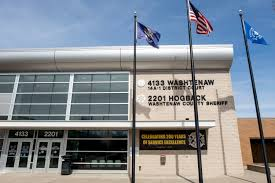
4133 Washtenaw Avenue, Ann Arbor, MI 48108
Phone: 734-973-4545 - 15th Judicial District Court
301 E. Huron Street, PO Box 8650
Ann Arbor, MI 48107
Phone: 734-794-6750
These courts handle local cases within Ann Arbor and surrounding areas.
Ypsilanti Area
- 14A-2 District Court
415 W Michigan Avenue, Ypsilanti, MI 48197
Phone: 734-484-6690 - John B. Collins 14B District Court
7200 S. Huron River Drive, Ypsilanti, MI 48197
Phone: 734-483-5300
These courts serve eastern Washtenaw County communities.
Western and Southern County
- 14A-3 District Court (Chelsea)
122 S Main Street, Chelsea, MI 48118
Phone: 734-475-8606 - 14A-4 District Court (Saline)
1000 N Maple Road, Saline, MI 48176
Phone: 734-429-2504
These locations allow residents outside Ann Arbor to resolve court matters locally
Federal Court Location (Separate Jurisdiction)
Ann Arbor also hosts a federal courthouse for the United States District Court, Eastern District of Michigan. This court handles federal cases only and operates separately from county courts.
Location:
Federal Building
200 E. Liberty Street
Ann Arbor, MI 48104
Phone: 313-234-5000
Frequently Asked Questions
This section answers common questions about Washtenaw County Court procedures, filings, and public legal access. Each answer focuses on practical information users often seek before or after court involvement.
What types of cases are heard in Washtenaw County Court?
Washtenaw County Court handles a wide range of legal matters based on court level. Circuit Court hears felony criminal cases, higher-value civil disputes, family law matters, and appeals. District Courts hear misdemeanors, traffic violations, landlord–tenant cases, and smaller civil disputes. Probate Court manages estates, guardianships, and mental health proceedings.
How can court information be found for a case?
Court information is available through the county’s official case management system. Users can search using a case number, party name, or court type. Case listings often show filing dates, hearing schedules, and current case status.
Are court records open to the public?
Many court records are open for public viewing under Michigan law. These records include case dockets, hearing dates, and basic filing history. Some materials remain restricted.
Restricted records often include juvenile cases, sealed matters, and sensitive family or mental health filings. Judges may limit access to protect privacy or legal rights.
Where are court hearings held?
Hearings take place at the courthouse assigned to the case. Circuit Court hearings occur at the main Washtenaw County Trial Court in Ann Arbor. District Court hearings are held at local district courthouses serving the area where the case originated.
Probate hearings usually take place at the Probate Court location listed on the case notice. Federal hearings occur at the federal courthouse in Ann Arbor for federal matters.
How does the filing process work?
The filing process depends on the case type. Criminal filings come through law enforcement and prosecutors. Civil and family cases usually start when a party files a complaint or petition with the court.
Filing fees, forms, and submission methods vary by court. Clerk staff record filings and update case activity once documents are accepted.